
Australia Post Packaging Costs Explained: What Businesses Need to Know
Understand Australia Post packaging costs and how smart packaging choices can save your business money on branded merchandise shipping.

Written by
Ruby Ahmed
Buying Guides & Tips
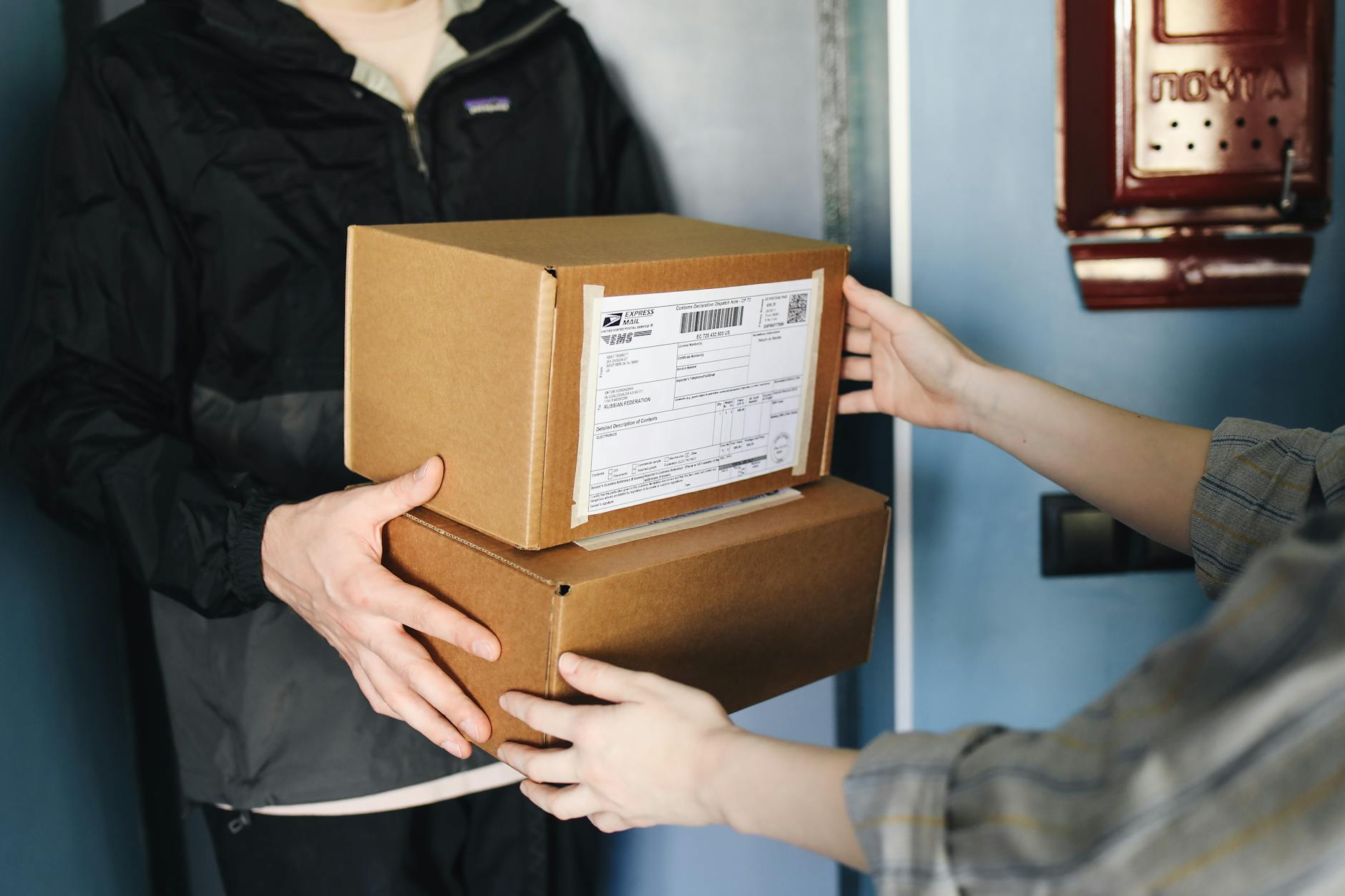
If you’ve ever ordered a bulk run of branded merchandise only to be blindsided by the shipping bill, you’re in good company. Australia Post packaging costs are one of the most overlooked line items in any promotional merchandise project — and for marketing teams managing tight budgets, getting this wrong can eat significantly into your ROI. Whether you’re a Sydney-based corporate team sending out client gift packs, a Melbourne sports club mailing membership kits, or a Brisbane business dispatching conference swag across the country, understanding how postage and packaging works in Australia is genuinely essential. This guide breaks it all down so you can plan smarter, spend less, and still deliver a polished branded experience.
Understanding How Australia Post Packaging Costs Are Calculated
Before you can manage your shipping costs, you need to understand what’s driving them. Australia Post pricing isn’t a flat rate — it’s calculated based on a combination of factors that interact in sometimes surprising ways.
Weight vs. Cubic Weight
Australia Post uses the higher of either the actual weight or the cubic weight of a parcel. Cubic weight is calculated by multiplying the length × width × height of the package (in centimetres) and dividing by 4,000. This means a large, lightweight package — like a box of branded tote bags or custom hoodies — can cost significantly more to ship than its actual weight would suggest.
For example, a carton of shopper and tote bags might weigh only 3kg on the scales, but if the box dimensions push the cubic weight to 6kg, you’ll be charged at the 6kg rate. This is a critical consideration when choosing packaging for your branded merchandise.
Parcel vs. Letter vs. Express Options
Australia Post offers several service tiers:
- Letters and large letters — suitable only for flat, lightweight items (think promotional flyers or gift cards)
- Parcel Post — standard delivery, typically 2–8 business days depending on origin and destination
- Express Post — next business day to major cities, with a money-back guarantee
- StarTrack — Australia Post’s freight service for larger commercial volumes
For most promotional merchandise, you’ll be working within the Parcel Post or Express Post categories. Express Post does carry a premium, but for time-sensitive campaigns — a pre-event despatch or an urgent client gift run — it can be worth every cent. If you’re regularly racing against deadlines, our guide to express promotional product printing for urgent orders is well worth a read alongside this one.
Destination and Zones
Shipping within metropolitan areas is generally cheaper and faster than shipping to regional or remote locations. Sending branded merchandise from Adelaide to Darwin, or from Perth to a rural New South Wales address, will attract higher rates. If your distribution list includes regional Australia, factor this into your budget early.
How Packaging Choices Directly Impact Australia Post Costs
Here’s where many businesses lose money without realising it. The packaging itself — the box, mailer bag, satchel, or envelope you choose — plays a huge role in determining your final postage cost.
Choosing the Right Packaging Format
Australia Post offers its own branded satchels and boxes at set price points, which can simplify budgeting. However, for branded merchandise distributors, using your own packaging (custom-branded boxes or satchels) is often preferable for presentation and brand consistency. Just be aware that oversized or irregular packaging can trigger higher pricing tiers.
Some practical tips:
- Use the smallest packaging that safely contains your product. Don’t ship a single branded pen in a large cardboard box — the cubic weight penalty will be painful.
- Consider poly mailer bags for soft goods like custom apparel, customisable blankets, or organic cotton branded merchandise. They’re lightweight, flexible, and won’t trap unnecessary air volume.
- Rigid boxes are ideal for premium gift sets, awards, or fragile items like desktop promotional products, but always measure carefully to control cubic weight.
- Flat envelopes work well for lanyards, stickers, or flat promotional items — and can keep you within the large letter pricing tier.
Branded Packaging: A Cost Worth Considering
Many Australian businesses — particularly those running corporate gifting programs or product launches — opt for custom-branded packaging. This adds a layer of perceived value to the unboxing experience, which can meaningfully improve brand recall. Yes, custom boxes carry a higher upfront cost, but when weighed against the ROI data behind promotional products, a memorable unboxing moment can justify the investment.
That said, always weigh the cost against your audience and purpose. A charity or not-for-profit running a fundraising pack despatch might prioritise plain, recycled mailers over premium branded boxes to keep costs down — and that’s entirely appropriate.
Practical Strategies to Reduce Your Australia Post Packaging Costs
Now for the part most guides skip. Here are actionable ways Australian businesses and sports clubs can keep their shipping spend under control.
1. Consolidate Shipments Where Possible
If you’re shipping to multiple recipients in the same city or postcode, consider whether a single bulk shipment to a central location makes more sense than individual parcels. A Gold Coast sports club sending kits to 50 local members might find it cheaper to despatch one large carton to the club premises and distribute locally, rather than posting individually.
2. Plan Merchandise That Ships Efficiently
Not all promotional products are equal when it comes to shipping economics. Lightweight, flat, or compressible items are your best friends. Items like branded socks, hooded towels, printed tote bags, or personalised backpacks all pack down reasonably well. By contrast, bulky or fragile items — such as promotional garden tools for outdoor corporate events or glassware — require more protective packaging and will attract higher shipping costs.
When planning your merchandise mix for an event, it’s worth thinking about the full lifecycle of the product: printing, packaging, and postage. Our guide on ink coverage and pricing for screen-printed merchandise touches on a similar principle — the true cost of branded merch is always more than just the unit price.
3. Use Click and Send or Business Accounts
If your business ships regularly, setting up an Australia Post Business Account or using their Click and Send platform can unlock volume discounts and streamlined processing. For marketing teams managing ongoing merch campaigns — like event swag for fun runs across Australia or merchandise for recurring sporting events — these accounts can generate meaningful savings over time.
4. Negotiate with Freight Alternatives
For very large bulk shipments, Australia Post may not always be the most cost-effective option. Courier services and freight companies can offer better rates for palletised loads. If you’re regularly distributing large volumes of promotional merchandise — say, a Canberra government department sending branded items to offices across multiple territories — it’s worth getting comparative quotes.
5. Think About Return Logistics
If your campaign involves any kind of two-way exchange — sending out samples, collecting feedback items, or running a promotional competition — factor return postage into your budget upfront. Prepaid return envelopes or satchels from Australia Post can be purchased in advance and included in your despatch, which simplifies the process for recipients and gives you cost certainty.
Australia Post Packaging Costs for Specific Merchandise Scenarios
Let’s look at how these considerations play out in real-world scenarios common to Australian businesses and clubs.
Corporate Gift Packs
A Hobart professional services firm sending branded gift packs to 200 clients at Christmas might include items like a custom notebook, a branded keep cup, and a premium pen. Packed into a rigid gift box, each parcel could easily fall into the 1–2kg weight tier with a box that measures 30cm × 20cm × 10cm — putting cubic weight around 1.5kg. At standard Parcel Post rates, this is manageable, but Express Post for 200 parcels adds up quickly. Ordering well in advance and using standard postage where possible is smart planning.
Sports Club Membership Kits
A Perth football club sending welcome kits to 150 new members might include a printed cap, a water bottle, and a club lanyard. Using poly mailer bags instead of boxes can halve the cubic weight and reduce per-unit postage meaningfully. Check out our Perth promotional products guide for product ideas suited to WA-based sporting groups.
Event Merchandise Distribution
For large-scale events — think sports days in Sydney or bridal expos — merchandise is typically delivered in bulk to a venue rather than individually posted. This is often the most cost-effective approach, with one or two large freight consignments replacing dozens of individual parcels.
Eco-Conscious Campaigns
For businesses focused on sustainability — ordering FSC-certified office supplies or products tied to events like World Environment Day or NAIDOC Week — choosing recycled or minimal packaging not only aligns with brand values but can reduce weight and volume, which directly lowers postage costs. Sustainable packaging and lower shipping costs aren’t mutually exclusive — in fact, they often go hand in hand. For further reading, our overview of promotional product waste reduction initiatives explores this theme in more detail.
Budgeting for Packaging and Postage in Your Merchandise Projects
A good rule of thumb for marketing teams: always build postage and packaging into your merchandise budget from the very first line item, not as an afterthought. A common mistake is to allocate a budget, spec out the products, get a great per-unit price, and then discover that shipping 300 parcels across Australia adds another 20–30% to the total project cost.
Here’s a simple approach:
- Estimate per-unit postage based on the likely packaged dimensions and weight of each item
- Add a 10–15% buffer for remote deliveries, returns, and re-sends
- Include packaging materials (boxes, satchels, tissue paper, void fill) as a separate line item
- Confirm delivery timelines with your print supplier and build in buffer time before your postage deadline
For products where you’re comparing suppliers, always ask whether they include freight in their quoted price — many don’t, and the difference can be significant.
Key Takeaways
Understanding Australia Post packaging costs is genuinely valuable knowledge for any Australian business or sports club managing promotional merchandise. Here’s what to keep in mind:
- Cubic weight is often the real cost driver — always calculate it before choosing packaging, and choose the smallest safe format for your product
- Poly mailers beat rigid boxes on postage costs for soft or compressible merchandise like apparel, towels, and bags
- Consolidate shipments where you can, especially for local club or office distributions
- Build postage into your budget from day one — not as an afterthought — and include a buffer for regional deliveries
- Australia Post business accounts and Click and Send can unlock savings for teams shipping regularly
- Sustainable, minimal packaging often reduces both environmental impact and shipping costs simultaneously
- Plan your merchandise with shipping in mind — the most cost-effective promo products are often the lightest and most compressible
With the right planning, australia post packaging costs don’t have to be a nasty surprise. They’re a manageable part of any well-run branded merchandise campaign — and with the strategies above, you’ll be well equipped to keep them under control.